5 tiny pockets of time that can add up to a more active day…

Life has a funny way of taking over the calendar.

You may start the week with every intention of getting your workouts in, and then real life happens. Kids need you. Work runs long. Dinner needs to be made. The dog needs a walk. Someone needs a ride somewhere. And suddenly that perfect 45-minute workout window disappears.

But here’s the good news:

Movement doesn’t have to happen all at once to matter.

Instead of waiting for the perfect block of time, start looking for the little pockets that are already hiding in your day.

And if you’ve followed me for a while, you know I’m a big fan of Tabata workouts that can be done in just 4–6 minutes. A few minutes here and a few minutes there can make movement feel much more doable, especially during busy seasons of life.

Here are five places to find it.

1. Turn TV time into movement time

I call this the Couch Potato Workout.

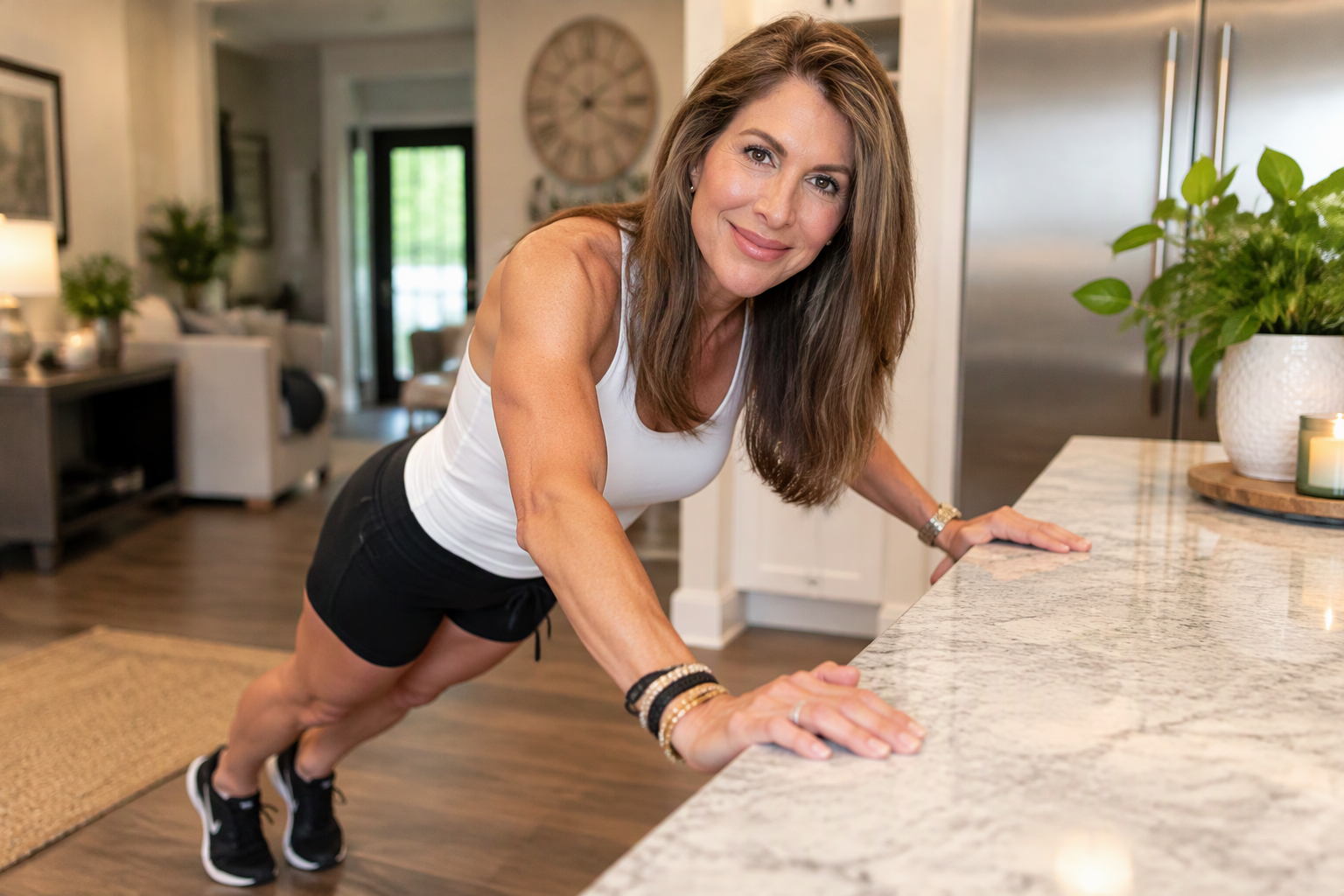
Instead of sitting through every commercial break, make commercials your cue to move. Stand up and do squats, marching knees, counter or wall push-ups, lunges, step-ups, or a few strength exercises.

Watch an hour of TV? Those little movement breaks can turn part of your evening downtime into workout time without giving up your favorite show.

No gym. No elaborate plan. Just commercial = move.

2. Move while dinner is cooking

Waiting for something to bake, simmer, boil, or heat up?

You’ve just found yourself a mini workout window.

Try squats at the kitchen counter, alternating reverse lunges, countertop push-ups, calf raises, or even one of my quick 4-minute Tabata’s. (@hlthchic on Instagram)

Dinner is doing its thing. You can do yours.

3. Make everyday carrying count

Life gives us plenty of things to carry, so use them.

Grocery bags, laundry baskets, pet supplies, packages, or whatever else needs to get from point A to point B can become an opportunity to challenge your muscles.

Carry with good posture, walk with purpose, and take an extra trip around the house or driveway before putting everything away.

Sometimes movement doesn’t need to look like a workout to be a workout.

4. Add movement to something you’re already doing

This is one of my favorites because it doesn’t require finding extra time.

Taking the dog out? Walk a little farther.

Talking on the phone? Walk while you chat.

Picking things up around the house? Add a squat or lunge.

Waiting for your coffee to brew? Do some countertop push-ups or calf raises.

The question becomes less “When am I going to work out?” and more “Where can I add a little movement to what I’m already doing?”

5. Keep a 4-minute workout in your back pocket

We often think that if we don’t have 30, 45, or 60 minutes, it’s not worth starting.

I disagree.

Four minutes? We can all work with that.

Pick two simple exercises and alternate them Tabata-style: 20 seconds of work followed by 10 seconds of rest, repeated for eight rounds.

Squats and wall push-ups.
Step-ups and marching knees.
Reverse lunges and standing core work.

You don’t need to change clothes, drive anywhere, or carve an hour out of your day.

You just need to start.

Think in Minutes, Not Hours

A busy season of life doesn’t mean movement has to disappear.

Instead of waiting for your schedule to magically open up, collect movement where you can find it. Four minutes in the morning. A few exercises while dinner cooks. Movement during commercials. An extra walk with the dog.

Those little pockets can help you build something even more important than the “perfect” workout:

Consistency.

And consistency is something we can fit into real life.

Don’t wait until you have time. Look for the time that’s already there. 💚

You got this.
I’ve been thinking about motivation lately, especially how it seems to disappear right when we need it most.

When we’re tired, stressed, busy, or overwhelmed, the last thing we usually feel like doing is the thing we know would be good for us.

And guess what? I don’t always feel like doing it either.

I learned this lesson when I was fresh out of college, working full time, coaching after work, continuing my own training, and racing and competing. There were plenty of days when I walked out of the office and debated skipping the gym.

But most of the time, I went.

Not because I was incredibly motivated. I had a system.

I’d tell myself, You don’t have to give it your all today. Just do 15 or 20 minutes of light weights.

Funny thing is, those 15 minutes often turned into a longer workout. And whether the workout was short or long, there was one thing I could count on:

I never regretted showing up. Ever.

Almost 45 years later, that lesson still influences how I approach my health and my life.

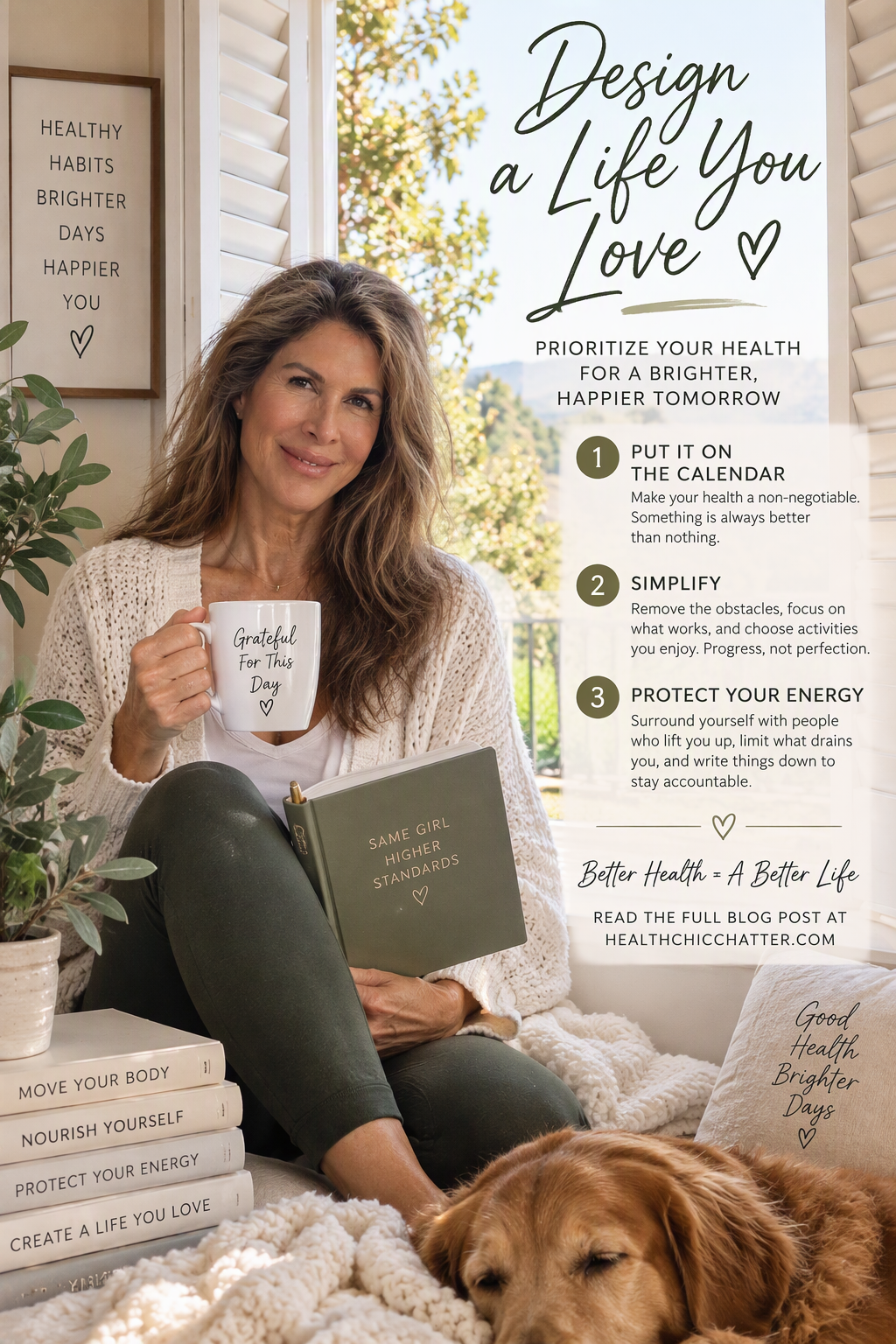
1. Put Your Health on the Calendar

I believe taking care of ourselves is part of our job.

Not something we squeeze in after everything and everyone else has gotten our time, but something we intentionally make room for.

For me, training has always been something I protect. It’s my medicine. Literally.

Your version doesn’t have to look like mine. Maybe it’s walking, swimming, strength training, pickleball, yoga, hiking, or simply getting outside.

Find something you enjoy and put it on your calendar like any other important appointment.

And on the days when you don’t have an hour? Do 20 minutes.

Only have 10? Do 10.

Something counts. And something done consistently is far more valuable than the perfect workout you never get around to doing.

2. Simplify Instead of Adding More

Health has become complicated.

We’re constantly hearing about another supplement, routine, wearable, diet, hack, or thing we should be tracking.

But sometimes the answer isn’t to add more.

It’s to remove the obstacles standing between you and the things you already know help you feel better.

Move your body. Eat nourishing food most of the time. Get outside. Prioritize sleep. Spend time with people who support you.

I try to front-load many of my healthy habits into my morning. I love starting the day slowly with gratitude and a cup of tea or coffee, usually with an animal nearby. I think about what I want to accomplish that day and what needs my attention.

Then I’ll take a slow walk on my treadmill to get some early steps while listening to a podcast, often something about longevity. From there, the day might include lifting, pickleball, training a client, or filming content.

Is every morning perfect? Absolutely not.

That’s not the goal.

The goal is to create an environment that makes the healthy choice a little easier to make.

3. Protect Your Energy and Your Environment

Health isn’t only about what you eat or how often you exercise. Pay attention to what fills your cup and what drains it.

That includes the people around you.

Notice who brings positive energy into your life, encourages your healthy choices, makes you want to show up, and genuinely supports the person you’re trying to become.

And also notice who tends to zap your energy.

You don’t have to eliminate every stressful person or situation from your life, but you can become more intentional about where you spend your time and energy. Sometimes creating a little more space for the people and activities that energize you results in more wins everywhere else.

Community and accountability matter, too. Tell someone what you’re working toward. Find a walking buddy, workout partner, pickleball group, trainer, or friend who encourages you to keep going.

And write things down.

Put your workouts on the calendar. Write down your goals for the week. Keep track of the habits that matter most to you. There’s something powerful about taking an intention out of your head and putting it on paper. It makes the commitment feel real and gives you something to come back to when motivation disappears.

Better Health = A Better Life

Ultimately, this isn’t about checking boxes, chasing a certain number on the scale, or creating a picture-perfect healthy lifestyle.

It’s about your life.

Better health gives us a better opportunity to do the things we love, spend time with the people we love, remain strong and independent, and keep saying yes to life as we get older.

And none of it requires perfection.

Some days you’ll miss the workout. You’ll have a crazy morning. You’ll eat differently than you intended. Your beautifully planned schedule will completely fall apart.

Welcome to being human.

Health isn’t built by getting everything right. It’s built by returning to the habits that serve you, again and again.

So calendar your health priorities. Choose activities you actually enjoy. Write down what you want to accomplish. Surround yourself with people who add energy to your life. And give yourself some grace when things don’t go according to plan.

If today gets away from you, tomorrow is another opportunity.

After nearly 45 years of making movement a priority, one thing I know for sure is this:

Don’t wait to feel motivated. Design a life that makes it easier to show up for yourself.

Because taking care of your health isn’t taking time away from your life.

It’s an investment in having more LIFE in your life. 💚

You got this.

10 Simple Ways to Feel Your Best Without Missing the Fun

The holidays should be about connection, celebration, and enjoying the people and traditions you love, not stressing over every cookie or missed workout.

Instead of an all-or-nothing approach, focus on a few simple habits that help you feel good while still enjoying the season. Here are 10 ways to do just that:

1. Find the Sweet Spot

Enjoy your favorite holiday foods without guilt. Choose the treats you truly love, savor them, and remember that moderation works better than deprivation.

2. Be a Mindful Eater

Slow down and actually enjoy your food. Pay attention to the flavors, textures, and experience of eating. You may find that you feel satisfied with less when you’re truly present.

3. Leave the Leftovers

Enjoy the holiday goodies at the celebration, but you don’t necessarily need to bring them all home. Sometimes it’s easier to get back to your normal routine when the party food stays at the party.

4. Bring a Healthy Dish

Heading to a gathering? Bring something nutritious that you know you’ll enjoy. A colorful salad, veggie platter, protein-rich appetizer, or lighter side gives you a healthy option without skipping the fun.

5. Keep Your Blood Sugar Steady

Don’t arrive at a party starving! Eat balanced meals throughout the day, include plenty of protein, and keep healthy snacks handy. You’ll be better prepared to make choices based on what you actually want instead of how hungry you are.

6. Plan Ahead

Holiday schedules can get hectic. A little meal prep and some planning for movement can go a long way. And remember, your workout doesn’t have to be long to count. A quick walk or 15 minutes of movement is still movement!

7. Be Mindful With Alcohol

Holiday cocktails can add up quickly. Decide ahead of time what feels right for you, alternate with water, and focus on enjoying the gathering rather than continually refilling your glass.

8. Manage Your Stress

Give yourself permission to pause. Even a few quiet minutes of mindfulness or meditation can help you step away from the holiday hustle and reconnect with the present moment.

9. Take a Breath

When things start feeling overwhelming, slow down and breathe deeply. A few intentional, relaxed breaths can give you a moment to pause, reset, and regroup.

10. Keep Moving

Movement is one of the best gifts you can give yourself during a busy season. Walk, strength train, stretch, dance, or sneak in a quick workout. Something is always better than nothing.

🎁 Your Healthy Holiday Takeaway

You don’t have to choose between enjoying the holidays and taking care of yourself.

Eat the cookie. Enjoy the party. Take the walk. Drink some water. Get some sleep. Move your body. Take a breath when you need one.

And most importantly, ditch the idea that you have to do any of it perfectly.

A few healthy choices sprinkled throughout your holiday season can help you feel stronger, more energized, and more present for the moments that matter most.

Healthy holidays aren’t about restriction. They’re about balance. 💚

Here’s to less guilt, more joy, and a healthier, happier holiday season!

It’s Monday morning. You step on the scale after being “so good” all week, take a deep breath, and… you’re right back where you started.

Sound familiar?

If you’ve ever felt like your weight loss journey is an endless game of two steps forward, two steps back, you aren’t alone. Most people who struggle to lose weight are actually crushing their goals 71% of the time.

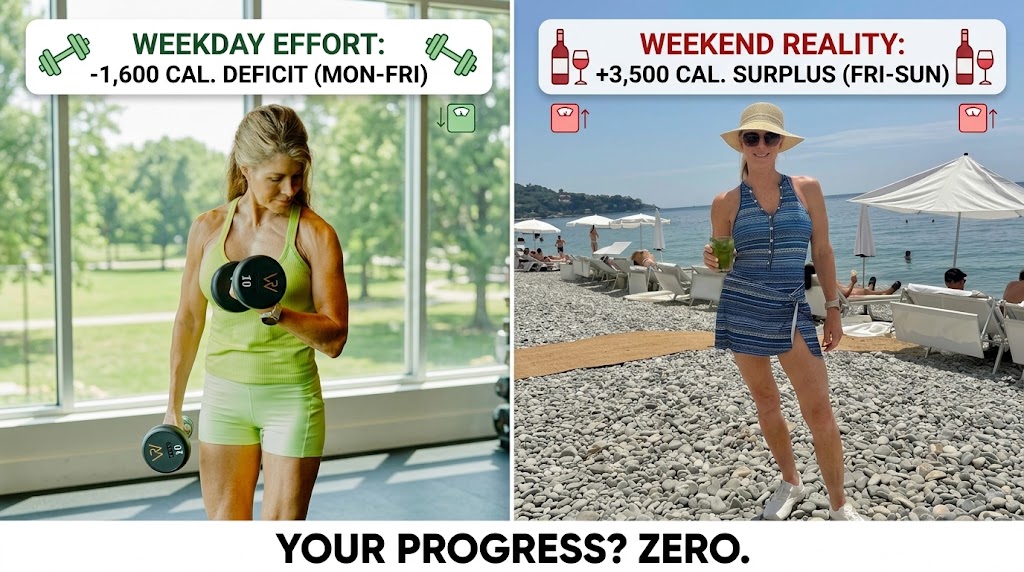
That’s Monday through Friday – – 5 out of 7 days of solid effort, mindful eating, & sticking to the plan. But those remaining 2 weekend days? They might be silently undoing everything you worked so hard to achieve. (argh)

Before you start questioning your willpower or blaming your metabolism, let’s break down what’s actually happening—and how to fix it.


The Weekend Math: How 48 Hours Erase 5 Days of Progress

To understand why the scale won’t budget, we have to look at the numbers. Calorie balance doesn’t reset at midnight on Friday; your body operates on a weekly average.

Let’s look at a typical scenario:

  • Your Daily Maintenance: 2,000 calories

  • Your Weekday Goal: 1,600 calories (a 400-calorie daily deficit)

  • Your Weekday Deficit: 4 days X 400 calories = 1600 calorie deficit

You head into Friday feeling victorious. But then the weekend unfolds:

  • Friday: Happy hour drinks, appetizers, & late-night snacking (3,000 calories)

  • Saturday: Bottomless brunch, coffee treats, and dinner out (3,500 calories)

  • Sunday: Family BBQ, side dishes, and dessert (3,000 calories)

Now let’s do the weekend math:

  • Weekend Maintenance: 3X 2,000 = 6,000 calories

  • Weekend Actual Consumed: 3,000 + 3,500 + 3,000 = 9,500 calories

  • Weekend Surplus: 3,500 calories (9,500 – 6,000 for 3X daily maintenance) 

The Result: Your 3,500-calorie weekend surplus completely wipes out your 1,600 calorie weekday deficit—leaving you in a net surplus for the week.

Progress made? Zero. No wonder the scale won’t budge on Monday.

(If seeing that Monday morning number constantly ruins your week, it might be time to change your relationship with tracking altogether. Check out my post on Is it time to break up with your scale? to rethink how you measure success.)


Why Weekends Are So Hard (It’s Not Just Willpower)

After coaching over 10,000 women, I can tell you that weekend overeating isn’t a character flaw. It happens because of four predictable triggers:

  1. Your Structure Vanishes: No work schedule means no set meal times. Grazing, mindlessly snacking, and eating on impulse take over.

  2. Social Pressures Multiply: Birthdays, date nights, family dinners—suddenly food becomes the central focus of every social interaction.

  3. Decision Fatigue Sets In: After white-knuckling your way through a strict diet all week, your self-control is exhausted. Naturally, you want to relax.

  4. The “I Deserve This” Trap: Telling yourself you were “good” all week creates a reward mentality that justifies letting loose.


3 Weekend Strategies That Actually Work

Successful long-term weight loss isn’t about being perfect Monday through Friday and going wild on Saturday and Sunday. It’s about building a sustainable routine across all 7 days.

Instead of falling into the restrict-and-binge cycle, try these three strategies this weekend:

1. The Pre-Event Buffer

Never head to a party, restaurant, or event completely famished. Eat a protein-rich snack (like Greek yogurt, a protein shake, or a handful of almonds) 30-60 minutes before you leave. Drink 8 oz of water (sparkling helps even more!). Arriving satisfied allows you to make conscious choices rather than eating on impulse.

2. Be Selective With Your Indulgences

You don’t have to indulge in every food opportunity that presents itself. Be selective. Is your best friend’s homemade birthday cake worth it? Absolutely. Are the generic potato chips sitting in a bowl at the party worth it? Probably not. Choose the items you genuinely love and skip the filler.

3.  Build a Calorie Cushion

If you know Saturday night involves a big dinner out, plan for it ahead of time. Trim 100–150 calories from your daily targets on Thursday and Friday by adjusting portion sizes or skipping liquid calories. This creates a safety margin you can draw from guilt-free.


The Mindset Shift: Drop the “Cheat Day” Mentality

The single biggest shift you can make is removing the labels. Stop viewing weekdays as “diet days” and weekends as “cheat days.”

When you treat every day as an opportunity to nourish your body, include foods you love, and support your long-term goals, the weekend stops being a trap. Weekends simply become days where you might enjoy a little extra food—without wiping out all your hard work.

You got this.

Have you ever walked into a room only to forget why you went there? Or found yourself grasping for a familiar name mid-conversation? While occasional slip-ups are a normal part of life, taking active care of your mind doesn’t have to be a guessing game.

Renowned double board-certified psychiatrist, 12-time New York Times best-selling author, and founder of Amen University, Dr. Daniel Amen, has dedicated his career to studying brain imaging and cognitive health. Dr. Amen and his team at Amen University advocate for a “memory-friendly lifestyle” built on five actionable pillars.

By turning these five daily habits into long-term routines, you can support your brain’s natural adaptability and build cognitive resilience for years to come.

The 5 Pillars of Brain Health

  1. Restorative Sleep

Sleep isn’t passive downtime; it’s when your brain performs vital routine maintenance. During deep sleep, the brain clears out metabolic waste, consolidates memories, and recharges energy for the day ahead. Skimping on quality sleep can lead to brain fog, lower focus, and reduced emotional balance. Aim for 7 to 8 hours of uninterrupted, quality sleep each night to give your mind the rest it needs.  (see this post!)

  1. Regular Movement

Physical activity isn’t just for your muscles and heart—it is essential for your brain. Exercise increases blood flow, delivering vital oxygen and nutrients to neural pathways. Whether it’s a 20-minute brisk walk, light cardio, strength training, or yoga, staying active keeps your physical body fit while keeping your cognitive functions sharp.  (see this post!)

  1. Brain-Healthy Nutrition

Your brain uses about 20% of the energy your body consumes, making proper fuel non-negotiable. A memory-friendly diet focuses on nutrient-dense whole foods:

  • Leafy greens and colorful vegetables to combat inflammation.
  • Healthy fats (like avocados, nuts, and omega-3s) to support brain cell structure.
  • Quality proteins to maintain stable energy and mood. Avoiding excessive sugar and processed foods helps prevent energy crashes that dull your mental acuity.
  1. Continuous Learning

Thanks to neuroplasticity, your brain can form new connections at any stage of life. To keep it sharp, you must challenge it regularly. Pick up a new hobby, learn a language, practice a musical instrument, or read challenging books. Constantly feeding your brain novel experiences helps build a robust “cognitive reserve”.

  1. Meaningful Connection

Human beings are wired for connection, and social interaction is a cornerstone of brain vitality. Spending quality time with family, engaging with friends, or participating in community groups helps reduce stress and prevents the cognitive decline associated with isolation. Prioritizing relationships with people who uplift you nourishes both your mind and emotional well-being.

Quick Takeaways

  • Brain health is a daily practice: Small, consistent actions compound over time to create lasting cognitive benefits.
  • Protect the basics: Quality sleep and physical movement are foundational to mental clarity and energy.
  • Fuel and challenge: What you put into your body directly affects how you think, while continuous learning keeps neural networks active.
  • Social ties matter: Staying connected to friends, family, and community provides critical emotional and mental stimulation.

Ready to Upgrade Your Brain Health? (Calls to Action)

  1. Pick One Small Pillar Today: Don’t overhaul your life overnight. Choose one habit to start with today—such as going to bed 30 minutes earlier, taking a 15-minute walk, or adding extra leafy greens to your dinner.
  2. Challenge Your Mind: Commit to learning something brand new this week. Pick up a new book, download a language app, or try a new recipe.
  3. Reach Out to Someone You Care About: Schedule a coffee date, call an old friend, or join a local group to strengthen your social connections.
  4. Explore Brain Health Resources: To learn more about brain-imaging research and actionable cognitive health courses, check out the resources available through Amen University.

You got this!

Every woman who walks into a gym, steps on a scale, or reviews her lab work is carrying something completely different.

Different hormones.
Different stress.
Different genetics.
Different sleep.
Different nutrition.
Different life experiences.

That’s why I often tell my clients: “We’re all snowflakes.”  No two snowflakes are identical, and no two women are either.

You didn’t wake up today with the exact same body, energy, or recovery capacity as the woman next to you. Maybe she slept eight uninterrupted hours while you were awake worrying about aging parents or a sick child. Maybe you’ve entered menopause, have Hashimoto’s, lipedema, or you’re recovering from an injury. Maybe you’re thriving. Maybe you’re just surviving.

All of those things matter.

Yet we continue to compare ourselves.

We compare our weight.
Our strength.
Our pace.
Our wrinkles.
Our metabolism.
Our progress.

But comparison ignores the most important variable:

Your starting point is yours alone.

Stop Chasing Someone Else’s Finish Line

Social media makes it easy to believe everyone else has figured it out.

The truth?

You rarely see the full picture.

You don’t see their genetics.
You don’t see their medications.
You don’t see their stress levels.
You don’t see their lab work.
You don’t see their struggles.

Trying to compare your Chapter 3 to someone else’s Chapter 20 is exhausting—and unfair.

The Best Health Plan Is Personalized

One-size-fits-all fitness doesn’t exist.

The “perfect” workout for your friend may leave you exhausted.

The diet that helped someone lose weight may not support your hormones.

The supplement everyone raves about may not be what your body needs.

Even your blood work should be interpreted in the context of you—your symptoms, your lifestyle, your age, your goals, and your medical history.

The healthiest women aren’t necessarily doing the same things.

They’re doing the things that are right for their bodies.

Celebrate Progress, Not Perfection

Instead of asking,

“Why don’t I look like her?”

Ask,

“Am I stronger than I was three months ago?”

“Am I sleeping better?”

“Do I have more energy?”

“Am I nourishing my body?”

“Am I building muscle that will serve me for decades?”

Those are the questions that truly move the needle on longevity.

Be Your Own Greatest Comparison

The only person worth comparing yourself to is the woman you were yesterday.

Celebrate every victory.

Every workout.

Every healthy meal.

Every pound lifted.

Every walk taken.

Every good night’s sleep.

Every choice that moves you toward a stronger, healthier future.

Because your journey doesn’t have to look like anyone else’s to be successful.

It only has to be authentically yours.


Your Challenge This Week

The next time you find yourself comparing your body, progress, or health journey to someone else’s, pause and remember:

You are a snowflake. Wonderfully unique. Beautifully designed. Entirely incomparable.

Honor your journey, trust your process, and keep becoming the healthiest version of you.

YOU got this, snowflake!

When people think about getting healthier, they often picture intense workouts or hours in the gym. But one of the most effective—and sustainable—forms of exercise is something most of us can do every day: walking.

Walking is a low-impact activity that supports fat burning, heart health, circulation, mental well-being, and longevity without placing excessive stress on your joints. Research has even shown that when the same amount of energy is expended, walking can reduce the risk of high blood pressure, diabetes, and heart disease just as effectively as running.

One reason walking is so powerful is that it often keeps you in Zone 2, a moderate-intensity exercise zone where your body becomes more efficient at burning fat for fuel. Better yet, it’s easy to stay consistent with a walking routine, and consistency is what delivers long-term results.

Walking outdoors offers even greater benefits. Natural sunlight helps regulate your circadian rhythm for better sleep, while time spent in nature has been linked to lower stress, improved mood, and enhanced mental clarity. Whether you’re walking through your neighborhood, a local park, or hiking a trail, you’re doing more than exercising—you’re supporting your overall well-being.

Want to maximize your walks? Try adding hills or a treadmill incline, wear a weighted vest once you’ve built a solid walking habit, or invite a friend (or your dog!) to join you. Social connection and fresh air make walking even more enjoyable and beneficial.

You don’t have to reach 10,000 steps overnight. Start by adding a 10–20 minute walk in the morning, a short walk after meals, or simply look for opportunities to move more throughout your day. Every step adds up.

The Bottom Line

Walking may not be flashy, but it remains one of the most powerful tools for improving your healthspan. It strengthens your body, supports your metabolism, boosts your mood, and helps you stay active for years to come.

Ready to put one foot in front of the other? Lace up your shoes, head outside, and make walking part of your daily routine. Your future self will thank you!

Many people assume that owning a pet automatically leads to better health and a longer life. While the science is more nuanced than the headlines suggest, research does show that our relationships with pets can positively influence both our physical and cognitive well-being—and the benefits go both ways.

Studies have found that dog and cat owners may experience slower cognitive decline as they age, likely due to the mental stimulation, companionship, and routine that pets provide. While the evidence linking pet ownership to longer life is less convincing than once believed, there is strong support for pets improving quality of life, reducing stress, and encouraging physical activity.

Just as pets can support our health, we play a major role in theirs. Diet, exercise, weight management, mental stimulation, and even dental health all influence how well our pets age. Research shows that overweight pets often live shorter lives, highlighting the importance of proper nutrition and portion control.

One particularly fascinating area of research comes from the Dog Aging Project, which is studying thousands of dogs to better understand aging. Scientists are finding that many of the biological markers associated with aging and mortality in dogs are remarkably similar to those found in humans. Because dogs age more quickly than we do, these studies may help accelerate discoveries that improve healthspan and longevity for both species.

Tips for Aging Better Together

  • Take daily walks and stay physically active.
  • Engage in activities that challenge the mind.
  • Prioritize balanced nutrition and healthy body weight.
  • Maintain good dental health.
  • Embrace the companionship and joy that pets bring.

The bottom line? Our health and our pets’ health are more interconnected than many of us realize. By caring for them well—and staying active and engaged alongside them—we can both enjoy healthier, happier, and potentially longer lives together. 🐾❤️

In Part 1, we learned that aging is essentially “accumulated damage.” If that sounds heavy, here is the good news: you are the architect of your own environment. A massive portion of chronic disease risk is driven by factors we can actually control.

By mastering these three pillars, you aren’t just “living healthy”—you are systematically reducing the friction that causes your biological clock to tick faster.

I. Sleep: The Body’s Nightly “Cleanup Crew”

Sleep isn’t just rest; it’s a metabolic car wash. This is when your brain flushes out toxins and your immune system scans for damage. To optimize this repair window:

  • The Consistency Rule: Go to bed and wake up at the same time every single day. Your biological clock (circadian rhythm) thrives on predictability.

  • The 8-Hour Window: Aim to be in bed for 7–9 hours. Even if you don’t sleep every minute of it, giving your body that dedicated “dark time” is essential.

  • The Golden Hour: Initiate a 60-minute digital sunset before sleep. No blue light, no stressful emails—just reading, stretching, or meditation.

  • The Digestive Gap: Finish your last bite of food at least 4 hours before bed. Digestion is an energetic process; if your body is busy breaking down a late snack, it can’t focus on cellular repair.

II. Exercise: Strengthening the Vessel

Movement is the signal that tells your body it is still “needed.” Without it, your systems begin to atrophy. Aim for at least 6 hours of total activity per week, focusing on three specific disciplines:

  • Resistance Training: “Lift heavy things.” Building and maintaining muscle mass is one of the greatest predictors of longevity and metabolic health. (There’s a reason you hear me repeat this over and over and over again, LADIES!!!)

  • Cardiovascular Health: Get your heart rate up through walking, swimming, or cycling to keep your “pipes” (arteries) clear and flexible.

  • The “Supple” Practice: Dedicate time to stretch, balance, and breathe. Mobility ensures you stay injury-free, while deep breathing regulates the stress hormones that drive aging.

III. Nutrition: Fueling for Repair, Not Just Energy

What you eat provides the raw materials for your body’s self-repair kit. The goal is to maximize nutrients while minimizing “biological noise.”

  • Crowd Out the Chaos: Try your best to eliminate processed junk, chronic overeating, and added sugars. These are the primary drivers of the inflammation we discussed in Part 1.

  • The Power List: Build your plate around vibrant vegetables, extra virgin olive oil (liquid gold for your heart), antioxidant-rich berries, high-quality protein, nuts, and seeds.

  • Timing is Everything: Remember the 4-hour rule. Ending your eating window early in the evening mimics a mini-fast, allowing your insulin levels to drop and your “anti-aging” genes to turn on while you sleep.

The Bottom Line

You don’t need a laboratory to slow down aging; you just need a routine. When you master the basics of how you move, eat, and rest, you stop being a victim of “wear and tear” and start becoming a master of your own vitality.

Every little bit helps!

You got this.

Using the famous NASA twin study as a backdrop, this message highlights that aging is not just a passage of time, but the accumulation of biological damage.

The summary can be broken down into three core pillars:

  • The Environment-Biology Link: Space travel showed how quickly harsh conditions (radiation, stress, and microgravity) can damage DNA and accelerate aging. On Earth, our daily environment and habits do the same thing at a different scale.

  • The Power of Prevention: Using the North Karelia Project in Finland as an example, the text demonstrates that large-scale lifestyle changes (improving diet, reducing smoking) can slash heart disease deaths by over 80%. It’s much easier to prevent damage—like arterial plaque—than it is to reverse it once it’s set in.

  • Prioritizing the Body’s Repair Shop: Your body is naturally designed for “anti-aging” through self-repair, but it needs the right conditions to work. Poor habits, like late-night heavy meals or lack of sleep, hijack the body’s resources, preventing it from performing critical tasks like fighting inflammation or destroying precancerous cells.

The Bottom Line: You can dramatically slow your biological clock by systematically reducing damaging exposures and giving your body the space and sleep it needs to repair itself.

You got this.