In previous posts, I’ve talked about how & why muscle loss can happen as we get older (sarcopenia). This ‘50% Protein Bump’ strategy is a practical blueprint for fighting back. It’s not about perfection; it’s about leveling up your intake to give your body the raw materials it needs to stay strong.

The latest research is clear: to maintain muscle as we age, we need to stop treating protein like an optional supplement and start treating it like a priority. Instead of making tiny adjustments, aim to increase your protein intake by 50% to 100% to see real changes in metabolism, appetite control, and muscle retention.

Key Takeaways for Your Muscle-Building Journey:

  • The “Secret” Benefit: Beyond building muscle, high protein intake makes healthy eating easier. By naturally suppressing hunger and cravings, it removes the “willpower” struggle from your diet.

  • Know Your Baseline: The average woman eats about 69g of protein, and the average man about 96g. To hit the “50% increase” goal, women should aim for an additional 35g daily, and men an additional 48g.

  • The “Palm” Rule: Forget the food scale. One palm-sized portion of meat or fish is roughly 20–30g of protein. Adding just two extra “palms” to your day can get you to that 50% increase.

  • Win the Morning: Most people back-load their protein at dinner. The biggest opportunity for muscle support is before noon.

    • Pro Tip: Mix egg whites into whole eggs to double the protein without changing the taste, or my method of “dinner for breakfast” by eating leftover lean meats in the AM!

  • Progressive Loading: Just like lifting weights, you don’t have to hit your max on day one. Add 5–10g of protein to one meal until it feels normal, then stack your wins until you reach your target.

Habit stacking for the protein win!

You got this!
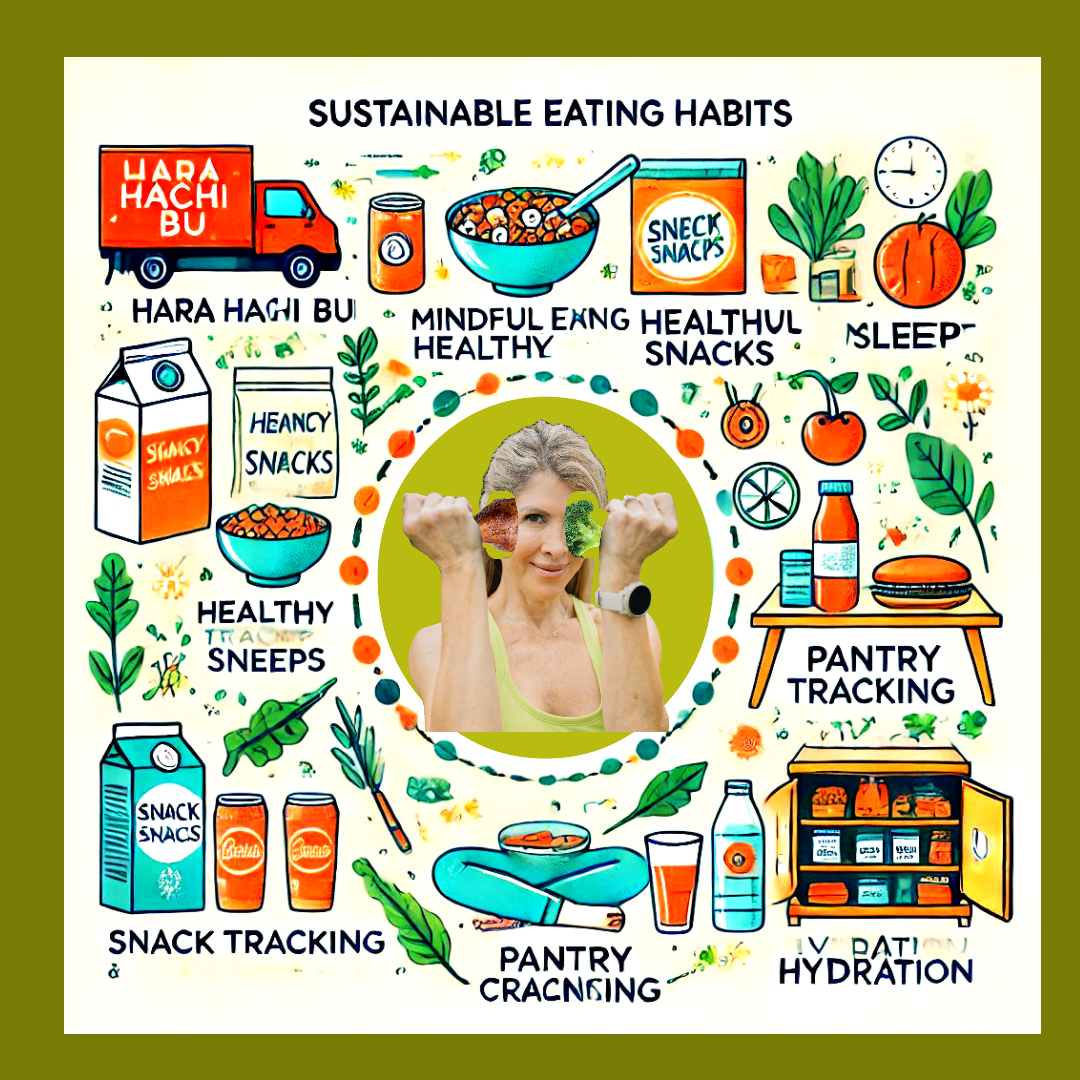
Friends, are you ready to make some simple changes that can greatly impact your health? Below I’ve outlined 8 easy-to-implement habits that can significantly improve your eating habits and overall health

These hacks are designed to be adaptable and can be incorporated gradually into your daily routine. By focusing on one healthy habit at a time, or implementing them together, you can make lasting, positive changes to your health AND your relationship with food.

  1. Hara Hachi Bu: Eat until you’re 80% full. Studies show this can drastically reduce calorie intake. I love this!
  2. Slow Down: Eat mindfully. Put your fork down, take deep breaths, or sip water between bites. Try counting how many times you chew before swallowing and you’ll be surprised at how often you start to swallow before a food is well chewed.
  3. Avoid Hangry Girl: Prepare healthy snacks (beef sticks, hard-boiled eggs, almonds) to avoid impulsive, unhealthy choices.
  4. Prioritize Sleep: Pay attention to sleep quality and if you aren’t getting 7-9 hours a night, consider taking steps to improve sleep (see post). Increasing sleep by 1 just hour to decrease cravings and burn more calories.
  5. Move It: Take a short walk after meals to improve blood sugar control.
  6. Track Snacks: Journal your snacking habits to identify triggers and patterns of emotional eating.
  7. Kitchen Cleanse: Remove unhealthy temptations and stock your kitchen with healthy, readily available options.
  8. Hydrate: Drink plenty of water throughout the day, especially before meals. To get the most out of your water, add some electrolytes.

And, if you’re looking for a few bonus hacks, here you go!

  • Protein First: Prioritize protein, healthy fats, and fiber at the beginning of your meals.
  • Time-Restricted Feeding: Try intermittent fasting (e.g., 12-hour fasts) to improve cellular health.
  • Avoid Fast Food: Opt for whole, unprocessed foods as much as possible. The ingredients used in most fast foods make them more like “frankenfoods” than food to nourish your health, plus the SEED OILS used are inflammatory.

Remember, it’s not about perfection, it’s about making healthier choices more often.

You got this!

Disclaimer: This is for informational purposes only and does not constitute medical advice. Consult a healthcare professional for personalized guidance.