The Science of Hypertrophy, Longevity, and Aging Strong

If there’s one message I wish more women — and men — understood about healthy aging, it’s this:

Muscle is not just about appearance. Muscle is protection.

It protects your metabolism, your bones, your balance, your independence, and your long-term quality of life. Yet so many people still avoid resistance training because they’re afraid of “getting bulky,” they think they’re too old to start, or they assume cardio alone is enough.

But here’s what the science continues to show us again and again:

Building and maintaining muscle may be one of the most important things you can do for your future health.

And the good news? You do not need to become a powerlifter or spend hours in the gym every day to make meaningful progress.

You simply need to train consistently and understand a few key principles.

What Is Hypertrophy?

You’ve probably heard the word hypertrophy floating around fitness conversations lately.

Hypertrophy simply means:

The increase in muscle size through training.

This happens when your muscles are challenged enough that the body adapts by rebuilding them stronger and slightly larger over time.

That adaptation matters far beyond aesthetics.

More muscle mass is associated with:

  • Better insulin sensitivity
  • Improved blood sugar regulation
  • Higher resting metabolic rate
  • Stronger bones
  • Better posture and joint support
  • Reduced fall risk as we age
  • Greater physical independence later in life

Muscle is metabolically active tissue. In many ways, it acts like an organ of longevity.

The Biggest Misconception About Building Muscle

One of the biggest myths in fitness is that you must lift extremely heavy weights to build muscle.

Heavy lifting absolutely has benefits, especially for strength development. But when it comes specifically to muscle growth, research suggests something incredibly important:

Volume drives hypertrophy.

That means the total amount of quality work you perform each week matters more than most people realize.

In exercise science, “volume” generally refers to:

  • sets
  • reps
  • and total work performed over time

A landmark meta-analysis by researchers Schoenfeld, Ogborn, and Krieger found a clear dose-response relationship between weekly training volume and muscle growth.

In simpler terms:

More quality training volume generally leads to more muscle growth.

A newer 2025 meta-regression published in Sports Medicine further confirmed that hypertrophy gains continue to increase as training volume increases — although eventually with diminishing returns.

That doesn’t mean you need endless workouts.

It means consistency matters.

It means your 2–4 weekly resistance workouts truly add up.

It means those extra few sets matter more than you think.

How Much Training Do You Actually Need?

The American College of Sports Medicine (ACSM) now supports approximately: 10 or more sets per muscle group per week for meaningful hypertrophy in most people. That sounds more intimidating than it really is.

For example:

  • 3 sets of squats on Monday
  • 3 sets of lunges on Wednesday
  • 4 sets of step-ups or leg press on Friday

You’ve already reached 10 sets for your lower body.

The point is not perfection.

The point is regular exposure to resistance training that encourages your body to maintain and build muscle instead of losing it.

Because after age 30, adults naturally begin losing muscle mass gradually every decade — a process called sarcopenia.

And if we do nothing?
That decline accelerates with age.

The Secret Most People Rush Through

Now here’s where things get really interesting. One of the most overlooked aspects of muscle-building is not the lifting phase…

It’s the lowering phase.

This is called the eccentric contraction.

Examples include:

  • lowering into a squat
  • lowering a dumbbell during a bicep curl
  • lowering yourself during a push-up
  • descending down stairs

Most people fly through this part of the movement without thinking.

But research shows this phase may be incredibly important for hypertrophy.

A study published in the Journal of Strength and Conditioning Research found that eccentric-focused training produced greater average muscle growth than concentric-only training:

  • 10.0% growth vs. 6.8%

That’s a meaningful difference!  Why? Because eccentric contractions create high levels of mechanical tension — one of the major drivers of muscle adaptation.

Translation: Slowing down the part most people rush through can dramatically improve your results.

What This Looks Like in Real Life

You don’t need complicated programming to apply this.

You can simply:

  • lower into squats more slowly
  • control the descent of your lunges
  • avoid dropping weights quickly
  • pause briefly during movements
  • focus on quality over speed

Try using a tempo like:

3 seconds down, 1 second up

That controlled lowering phase increases time under tension and challenges the muscles differently.  And yes — lighter weights can suddenly feel much harder when you stop relying on momentum.

More on this topic next time.

Remember, muscle isn’t about just about aesthetics — it’s longevity insurance. Start building your future now.

You got this.

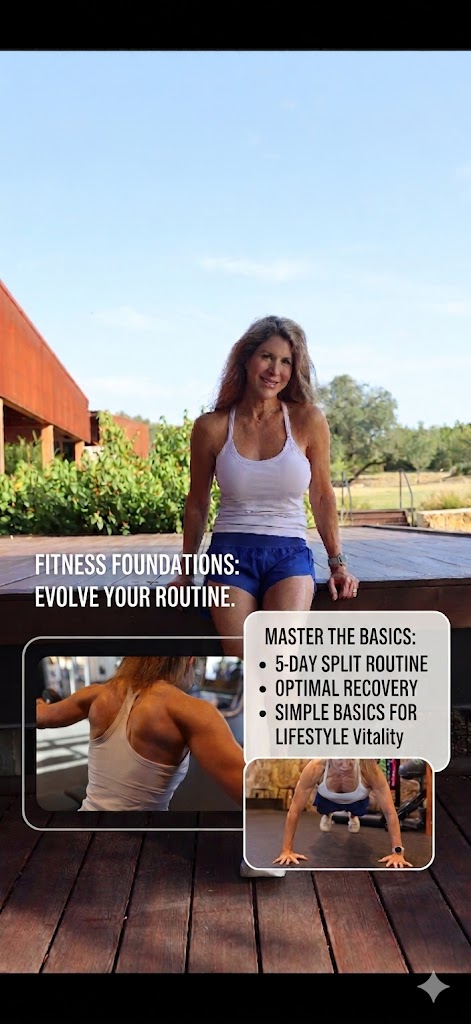
Building a powerful, functional physique doesn’t have to be a guessing game. If you are looking for a clear roadmap to get stronger and build muscle, a 5-Day Split is one of the most effective ways to manage volume and recovery.

This plan uses a combination of Push, Pull, and Legs followed by an Upper and Lower body split to ensure every muscle group is targeted with precision.

The 5-Day “Evolution” Split

For each day, choose 3–4 exercises from the lists below. To maximize your results, perform 3–4 sets of each chosen move.

The Method: Pyramid Sets

To build strength while staying safe, we recommend a Pyramid Rep Scheme:

  • Warm-up: Start with one light set of 12 reps to get the blood flowing.

  • The Work: For each succeeding set, increase the weight and allow your reps to drop (e.g., Set 1: 12 reps, Set 2: 10 reps, Set 3: 8 reps).

  • Recovery: Keep the intensity high by resting only 30–60 seconds between sets.


The Exercise Breakdown

Day 1: Push (Chest, Shoulders, Triceps)

  • Incline Dumbbell Press

  • Flat Machine Press (or pushup or flat bench dumbbell press)

  • Cable Fly (or machine or flat bench fly depending on equipment)

  • Dumbbell Lateral Raise (seated or standing)

  • Overhead Shoulder Press

  • Tricep Pushdown (a close grip push up on the floor or bench can work if no  cable available)

  • Overhead Tricep Extension

Day 2: Pull (Back, Rear Delts, Biceps)

  • Pull Ups / Lat Pulldown (I like to use the chin/dip station on this one)

  • Barbell Row (use a wider grip, but if a BB isn’t available, use DBs)

  • Chest Supported Row (sit facing bench at an incline)

  • Cable Rear Delt Fly

  • Dumbbell Curl

  • Hammer Curl

Day 3: Legs (The Foundation)

  • Squat (Barbell or Hack)

  • Romanian Deadlift

  • Leg Press

  • Leg Extension

  • Hamstring Curl

  • Calf Raises

Day 4: Upper Body (Refinement)

  • Incline Dumbbell Press

  • Lat Pulldown

  • Machine Chest Press

  • Seated Row

  • Lateral Raises

  • Bicep Curl

  • Tricep Pushdown

Day 5: Lower Body (Burnout)

  • Hack Squat / Squat

  • Romanian Deadlift

  • Walking Lunges

  • Leg Curl

  • Leg Extension

  • Calf Raises

Quick Core Finish: To maximize your definition without adding much time, finish each workout with 2–3 quick sets of core work—like planks or leg raises—to keep that “internal corset” strong and stable.

The Bottom Line: Consistency is the key to transformation. By following this 5-day split and challenging yourself with progressive weight increases, you’ll build the functional strength and muscle definition needed to feel like an athlete at any age.

You got this!

In Part 1, we learned that aging is essentially “accumulated damage.” If that sounds heavy, here is the good news: you are the architect of your own environment. A massive portion of chronic disease risk is driven by factors we can actually control.

By mastering these three pillars, you aren’t just “living healthy”—you are systematically reducing the friction that causes your biological clock to tick faster.

I. Sleep: The Body’s Nightly “Cleanup Crew”

Sleep isn’t just rest; it’s a metabolic car wash. This is when your brain flushes out toxins and your immune system scans for damage. To optimize this repair window:

  • The Consistency Rule: Go to bed and wake up at the same time every single day. Your biological clock (circadian rhythm) thrives on predictability.

  • The 8-Hour Window: Aim to be in bed for 7–9 hours. Even if you don’t sleep every minute of it, giving your body that dedicated “dark time” is essential.

  • The Golden Hour: Initiate a 60-minute digital sunset before sleep. No blue light, no stressful emails—just reading, stretching, or meditation.

  • The Digestive Gap: Finish your last bite of food at least 4 hours before bed. Digestion is an energetic process; if your body is busy breaking down a late snack, it can’t focus on cellular repair.

II. Exercise: Strengthening the Vessel

Movement is the signal that tells your body it is still “needed.” Without it, your systems begin to atrophy. Aim for at least 6 hours of total activity per week, focusing on three specific disciplines:

  • Resistance Training: “Lift heavy things.” Building and maintaining muscle mass is one of the greatest predictors of longevity and metabolic health. (There’s a reason you hear me repeat this over and over and over again, LADIES!!!)

  • Cardiovascular Health: Get your heart rate up through walking, swimming, or cycling to keep your “pipes” (arteries) clear and flexible.

  • The “Supple” Practice: Dedicate time to stretch, balance, and breathe. Mobility ensures you stay injury-free, while deep breathing regulates the stress hormones that drive aging.

III. Nutrition: Fueling for Repair, Not Just Energy

What you eat provides the raw materials for your body’s self-repair kit. The goal is to maximize nutrients while minimizing “biological noise.”

  • Crowd Out the Chaos: Try your best to eliminate processed junk, chronic overeating, and added sugars. These are the primary drivers of the inflammation we discussed in Part 1.

  • The Power List: Build your plate around vibrant vegetables, extra virgin olive oil (liquid gold for your heart), antioxidant-rich berries, high-quality protein, nuts, and seeds.

  • Timing is Everything: Remember the 4-hour rule. Ending your eating window early in the evening mimics a mini-fast, allowing your insulin levels to drop and your “anti-aging” genes to turn on while you sleep.

The Bottom Line

You don’t need a laboratory to slow down aging; you just need a routine. When you master the basics of how you move, eat, and rest, you stop being a victim of “wear and tear” and start becoming a master of your own vitality.

Every little bit helps!

You got this.

We’ve all been there: staring at our running shoes or a yoga mat, waiting for that lightning bolt of inspiration to strike. We think we need to feel like working out before we actually do it. But if you ask the world’s top performers, they’ll tell you a secret: Motivation is a liar.

As Robin Arzón, Peloton’s Head Instructor and VP of Fitness Programming, bluntly puts it: “Motivation is fleeting. It’s ephemeral.” If you only move when you feel motivated, you’ll only move on your best days. But life happens on the “average” days—the tired days, the rainy Tuesdays, the mornings when the snooze button looks a lot more inviting than a barbell.

To change your life, you have to stop chasing motivation and start building momentum.

The Anatomy of Momentum: Habit, Process, Schedule

Momentum isn’t a feeling; it’s a system. Arzón argues that the real “flex” in fitness isn’t how much you can lift or how fast you can run—it’s how consistently you show up. It’s about the habit, the process, and the schedule.

Think of your fitness practice like a high-stakes meeting with your most important client. You wouldn’t ghost a CEO or a major partner just because you “weren’t in the mood,” right? That important client is you. When you cancel on yourself, you’re sending a message to your subconscious that your goals are negotiable. They aren’t.

The Power of Being “Selfish”

Consistency doesn’t always have to mean high-intensity shouting and sweat. Sometimes, momentum is built in the quiet. A dear friend of mine shares a similar philosophy regarding her morning routine. Every day at 6:00 AM, she begins a ritual of meditation, tea, and a slow walk on her treadmill while watching the sun rise.

Her secret? “I’m selfish for at least an hour before I’ll do anything else.”

By claiming that first hour, she isn’t just exercising; she is anchoring her day. She is filling her own cup so she has something to pour into others later. Whether it’s a sunrise walk or a heavy lifting session, that “selfish” time is the foundation of a resilient life.

Put It Into Practice: How to Build Your Momentum Engine

If you’re ready to stop waiting and start doing, here is your blueprint for building unstoppable momentum:

  • Audit Your Calendar: Treat your workout like a non-negotiable appointment. Block the time, set the reminder, and show up. No excuses, no “rescheduling” with yourself.

  • The Two-Minute Rule: Don’t wait to feel “ready.” Begin anyway. Commit to just two minutes of motion—rolling out the mat, walking to the end of the block, or doing one set of pushups. Often, those two minutes are enough to flip your mindset and let momentum take over.

  • Choose Strength Over Size: Pick a movement that makes you feel strong, not small. Whether you run, lift, dance, hike, or swim, the magic isn’t in the specific modality; it’s in the act of showing up for yourself.

  • Cast Your Vote: Remember that power isn’t a personality trait you’re born with; it’s a practice you earn. Every rep, every step, and every session is a literal vote for the version of you that feels most alive.

Stop waiting for the spark. Start the engine. The journey is the fun part—and it begins the moment you decide to move. If you don’t have an hour, no worries; shorter exercise “snacks” throughout the day will reap amazing benefits.

You got this!

In 2026, the wellness landscape is all about recognizing that all efforts count—no matter how small. From quick exercise “snacks” that add up over time to prioritizing standing over sitting and committing to lifting weights, the focus is on sustainable, science-backed habits that enhance both the quality and length of your life. These 12 trends emphasize personalized approaches that build vitality gradually, proving that consistency in everyday actions is the true key to longevity.

1. Zone 2 Cardio

Zone 2 training involves low-to-moderate intensity aerobic exercise (about 60–70% of your max heart rate), where you can still chat comfortably. This enhances mitochondrial efficiency for improved fat burning, enhanced metabolic health, and increased cardiovascular endurance. Remember, all efforts count—even a short Zone 2 walk contributes to long-term gains without overwhelming your system.

2. High Protein Distribution

Protein is crucial for everyone, supporting bone health and muscle maintenance as we age. The 2026 trend is distributing intake evenly—aim for 0.45–0.9 grams per pound of body weight across meals—to optimize synthesis and curb hunger. Every protein-rich snack or meal adds up, reinforcing that small, consistent choices build lasting vitality. The RDA is the minimum for life…not health optimization. Plus, protein requires 25-30% of the calories ingested just to digest this macro nutrient, so your net caloric intake is less compared to carbs or fats. 😉

3. Stacking “Fat Loss Days”

Ditch extreme diets for “fat loss days” filled with whole foods, movement, and a modest 10–25% caloric deficit below your daily needs. Longevity comes from stacking these days over time, where all efforts count—each balanced day contributes to sustainable fat loss and overall health.

4. Habit Stacking

Make wellness effortless by “anchoring” new habits to existing ones, like pairing a probiotic with your morning coffee. This reduces reliance on willpower and creates routines that endure. It’s a reminder that all efforts count; even tiny stacks accumulate into powerful, lifelong habits.

5. Lifting Heavier Weights: The Ultimate Armor for Longevity

I am on repeat here, but lifting weights isn’t optional. It’s the cornerstone of 2026 wellness, emphasizing that true health demands mechanical challenge. Prioritize heavier loads to reap these benefits:

  • Muscle as a Metabolic Sink: Build more muscle to boost resting energy expenditure and insulin sensitivity for better carb processing.
  • Fast-Twitch Recruitment: Engage these fibers to combat age-related atrophy, preserving power and reducing fall risks.
  • Bone Density & Joint Resilience: Strengthen bones and tissues for injury prevention.
  • Neurological Adaptations: Enhance brain-muscle connections and cognitive function.

All efforts in the weight room count—start where you are and progress, as every lift adds up to a stronger, more resilient you. Here are a couple past posts to help:

6. Front-Loading Calories

Shift away from heavy dinners by eating most calories and carbs at breakfast and lunch, when your metabolism peaks. This aligns with your body’s rhythms to minimize fat storage. Pair it with standing more than sitting during meals to amplify benefits—every upright moment contributes to better energy use.

7. Precision Supplementation

Move beyond generic vitamins to personalized plans based on biomarkers, stressors, and age. This targeted strategy fills real gaps effectively. Remember, all efforts count; even a single, well-chosen supplement can enhance your routine when combined with habits like lifting weights.

8. Creatine for Brain Power

Once just for muscles, creatine now shines for brain health by boosting ATP production, aiding memory, focus, and stress resilience. Integrate it into your day, and combine with exercise snacks—short bursts that add up to improved mental and physical performance.

9. Optimizing Mitochondrial Health

Keep your cellular powerhouses thriving through Zone 2 cardio, strength training (especially lifting weights), and nutrients like CoQ10 and Omega-3s. All efforts count here; every session or nutrient choice supports efficient energy production and longevity.

10. Micro-Movement Snacks

Fight “sitting disease” with 30-second to 5-minute bursts—like 20 squats or a quick walk. These exercise snacks add up throughout the day, keeping your metabolism humming and joints mobile. Emphasize standing more than sitting whenever possible; even brief stands contribute to better circulation and energy levels. (Movement Matters)

11. Outdoor “Dual-Purpose” Training

Blend fitness with nature for physical and mental boosts—sunlight and fresh air lower cortisol and elevate mood better than indoor sessions. Incorporate lifting weights outdoors or standing-based activities; all efforts count, turning every park outing into a step toward vitality.

12. Smart Circadian Lighting

Use lighting that mimics the sun: bright blues in the morning for alertness, amber dims at night for melatonin. This optimizes sleep and energy. Tie it to habits like standing more during lit hours or adding exercise snacks—proving that small, integrated efforts accumulate for profound health impacts.

In essence, these 12 trends show that lifelong vitality isn’t built through extremes—it’s created through small, intentional choices repeated over time. When you combine movement, nourishment, strength, and recovery in simple, sustainable ways, your body rewards you with more energy, resilience, and joy in daily life.

Now is the perfect moment to prioritize your health. Start with one habit, one walk, one protein‑rich meal, or one micro‑movement snack. Your future self will thank you for every step you take today.

Here’s to your health in 2026!

Experts are shifting their focus on what truly determines long-term health, and the verdict is clear: your overall level of movement throughout the day is the single most important factor—even more critical than your formal, structured workouts.

You can’t “out-exercise” a sedentary lifestyle. Research on the “Active Couch Potato Syndrome” shows that dedicated exercisers are not immune to the diseases of sedentary living if they spend the majority of their day sitting. This is what movement expert Katy Bowman calls the “lazy athlete mentality”—using your workout as a “hall pass” for inactivity the rest of the day. The goal is to dramatically increase all forms of general, everyday activity.

The following four habits are key to breaking this pattern, forming the foundation for energy, focus, and graceful aging:

1. Set the Tone with a Morning Routine

Start your day with movement. Completing an exercise routine first thing in the morning establishes a movement-positive mindset and prevents you from putting it off until the day gets away from you. I like to have enjoy my “coffee” walk which is slowly (so I don’t spill!) on the treadmill, looking out into our yard, giving thanks and listening to praise music or a podcast. For my husband, it’s taking the pup out around the block.

2. Embrace the “Exercise Snack” (Micro Workouts)

The key to maintaining high daily movement is to sprinkle in brief, intense interludes of activity—often referred to as micro workouts or “exercise snacks”. These are short bursts of explosive or powerful activity throughout your busy day.

• Examples: Taking the stairs instead of the elevator, performing squats while waiting for the water to boil, or doing a quick set of push-ups. Now that commercials have wormed their way back into streaming platforms, making a point to move or stretch during commercials offers a great opportunity if you’re watching TV!

• Maximum Efficiency: For a highly efficient, time-crunched option, consider the Tabata method—a structured 4-minute high-intensity workout (20 seconds of work, 10 seconds of rest, repeated 8 times). I often post many examples of these types of quick, effective routines that can be done at work or home, with or without equipment, on my social media channels. You know how much I love Tabata’s- they were a Life saver for me during my heavy work years. Need inspiration? Check out my Instagram or TikTok for examples: @Hlthchic

3. Find More Opportunities to Walk

Walking is fundamental. Prioritize finding more opportunities to walk every day. Whether it’s parking further away, taking a walking meeting, or simply doing laps around the block, increasing your daily steps is vital for burning more energy and combating “energy toxicity.”

4. Maintain Strength with Structured Workouts

While daily activity is the foundation, properly structured workouts remain wonderful and necessary. Continue to incorporate these sessions to specifically maintain and build strength and muscle mass, contributing to a long, healthy, and energetic life.

Until next time, you got this!

If your first thought for fat loss is hitting the pavement for a run, you might be training all wrong! New research suggests there’s a secret, easier, and more efficient way to burn calories and fat without the joint strain: incline walking.

The Surprising Science of Walking Uphill

Studies comparing flat-surface running to steep incline walking found an amazing result: Walking at 3 mph on a steep incline (16–18%) can burn 70% more calories than running on a flat surface!

How does this work?

  • More Muscle, More Burn: Walking uphill forces your body to recruit far more muscles—especially in the glutes, hamstrings, calves, and core. This greater muscle recruitment costs your body more energy, significantly boosting your metabolic burn.
  • The Fat-Burning Zone: While running might burn a higher total number of calories, incline walking shifts your body’s preferred fuel source. It encourages fat oxidation, meaning your body relies more heavily on stored fat for energy compared to running, which leans more on burning glucose (sugar).
  • Heart Rate Hike: Even at the same speed, walking on an incline elevates your heart rate much more than walking on flat ground, signaling a higher cardiovascular and energy demand.

Your Fat-Loss Fitness Plan

Want to maximize fat burning with this low-impact secret? Here are the best ways to get your incline walk in:

  1. Hike – head outdoors and get some vitamin D
  2. Walk Stairs (find some stairs or a nearby hill)
  3. Incline Treadmill Walking – Convenient for bad weather days
Bottom line: Stop pounding the pavement and start walking up those hills! Your joints (and your fat cells) will thank you.

Lisa

We’ve all had those moments when a conversation suddenly shifts and becomes hard. Maybe someone’s words sting or a tone changes, and suddenly, you feel it in your body—your chest tightens, your heart races, and it feels like you can’t quite find your voice. Sometimes we lash out; other times we retreat into silence. After the encounter is over, we wish we had been able to stay steady and speak from a place of kindness and clarity instead of fear. It’s such a tender human experience, and it happens to us all.

The truth is: There’s always a small space—a pause—between what happens and how we choose to respond. In that pause lives our freedom.


A Pause is a Prescription

The simple act of pausing before you speak is more than just a polite gesture; it’s a powerful practice with tangible benefits for both your internal and external world.

The Health Benefit: Calming Your Nervous System

When we react instantly, we’re operating from our body’s “fight or flight” stress response. That tightness in your chest and racing heart? That’s a surge of cortisol and adrenaline. Constant reactivity keeps you in a state of low-grade stress, which is detrimental to long-term health. Taking even one gentle breath before you speak acts as a mini-circuit breaker. It gives your parasympathetic nervous system a chance to engage, slowing your heart rate and allowing you to soften. This little moment of presence trains your body to move from reactivity to response, which is a powerful tool for stress management.

The Relationship Benefit: Building Bridges, Not Walls

In every relationship—personal or business—the quality of our connection is determined by the quality of our communication. When we pause, we give ourselves the chance to notice what’s really happening inside and to choose words that build bridges instead of walls.

  • In Personal Relationships: A pause allows you to hear the emotion behind your loved one’s words, rather than just the content. You can move from defending your position to seeking to understand, opening the door to greater honesty, compassion, and connection.
  • In Business: When disagreements arise with a client, colleague, or team member, a reactive retort can escalate conflict and erode trust. A mindful pause allows you to formulate a response that is strategic, professional, and solution-focused, ultimately strengthening the relationship and improving outcomes.

That little moment of presence can open the door to greater understanding.


Moving Beyond “Sides” in Difficult Conversations

With practice, we can get better at this. Little by little, we can learn to bring more calm, courage, and compassion into all our conversations. Even the most difficult moments can become opportunities to grow closer and heal.

This powerful principle isn’t just for our homes and boardrooms—it is essential for our communities and our world. The biggest challenges we face, from family issues to city-wide problems, require us to move past entrenched positions. We must stop seeing people as being on an opposing “side” and start seeing them as partners in a shared purpose.

If we can bring this pause into our toughest political or community discussions, we can stop the cycle of partisan reactivity. We can commit to a simple truth: We should not be focused on winning; we should be focused on solving. When we pause, we can ask, “What is the collective good here?” instead of “How do I prove them wrong?”


The Call to Action: Pause for Progress

Every conversation is an opportunity. Every word becomes a chance to bring more love, clarity, and progress into the world—and that’s a gift we can give, again and again.

Let’s start today. The next time a conversation gets heated—whether it’s at the dinner table, in a work meeting, or even in a comment section online—I challenge you to simply:

Stop. Take one breath. Then speak.

Let the pause be your contribution to a more compassionate world. United we stand only when we choose to pause, listen, and build solutions together.

‘Till next time…WE got this!

It’s July, and we’re officially halfway through the year. This is a great time to check in on the goals you set back in January.

How Are Your Goals Doing?

If you’re crushing it, that’s fantastic—keep that momentum going! But if you’ve fallen a bit off track, don’t worry, you’re not alone. This isn’t a setback; it’s an opportunity to reset and refocus.

Take a moment to pause and reflect…what’s been working for you, and what hasn’t? Be honest with yourself.

Now, let’s get back to the fundamentals that truly make a difference:
* Hydrate: Aim for at least 80 oz of water daily.
* Move: Hit those 10,000 steps each day.
* Strengthen: Incorporate strength training at least 3 times a week.
* Fuel Smart: Stay on top of your calorie intake, making sure you’re nourishing your body, not hindering it.                                                                                                                      * Prioritize whole foods to meet your calorie goals & aim for .7-1.0 grams of protein per pound of your goal weight.

Simple Steps, Big Impact…

Reaching your goals doesn’t have to be complicated. You don’t need a complete overhaul—just a renewed commitment and a fresh mindset.  Your initial goals are still within reach, and you absolutely have the power to achieve them. Let’s shed any distractions or excuses that have held you back and recommit to what makes you feel strong, healthy, and powerful.

Let’s finish the year with intention and strength!  YOU got this.

  • Mindset Mapping: Reflect on beliefs, habits, and past struggles. Acknowledge the cost of inconsistency and visualize the rewards of discipline.
  • Momentum Multiplier: Study role models, assess your current level of consistency, and establish accountability systems to accelerate progress.
  • Habit Hustle Protocol: A three-phase method for lasting habit change—Break & Build (eliminate harmful habits), Train & Tweak (introduce positive routines), Lock & Load (automate habits for long-term success). A 66-day minimum is recommended to cement behaviors.
  • Micro-Movement Method: Small, daily wins (S.C.A.—Small Consistent Actions) lead to big results over time. Mundane but repeated efforts build momentum. Go ahead…be boring!
  • Pyramid of Peak Performance: Establish mission-driven motivation, use strategic recovery, develop resilience, and commit to structured consistency for lifelong health and fitness success.

Remember, success in health and fitness isn’t about drastic changes—it’s about small, steady steps that compound over time.  Are you getting a good night’s sleep? If not, hacking your sleep and working on a bedtime routine could be a good place to start.  (See post, “Sleep. the Magic Pill“)

To help you map our your WHY and identify steps you can start taking today, take some time to WRITE responses to these questions:

  1. What is one powerful habit that can amplify others?
  2. What belief is making me inconsistent?
  3. Name 3 ways this inconsistency is negatively impacting you?
  4. What are 5  rewards you will get with consistency?
  5. What is 1 new move you can make each day for the next week to move closer to your desired self?
  6. Can you identify 3-5 people who are MASTERS of consistency?
  7. What do you think they do to remain consistent?
  8. Can you identify a solid accountability partner?
  9. What is your plan to get back on track?
  10. What can you do to celebrate yourself?

Small consistent steps = BIG results!

You got this!