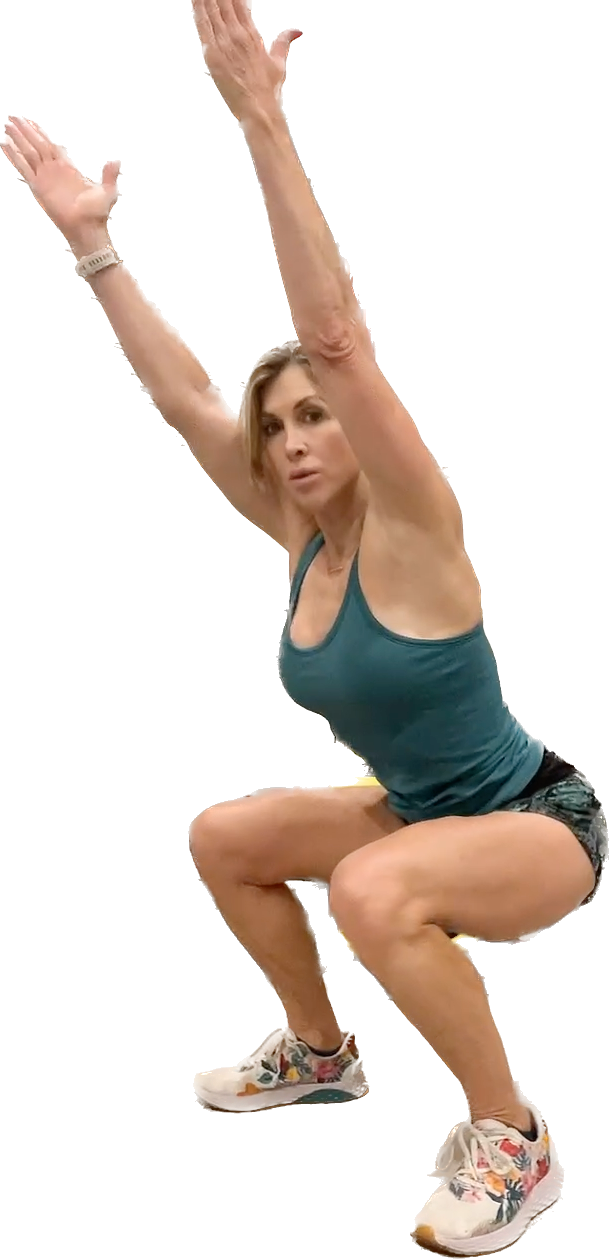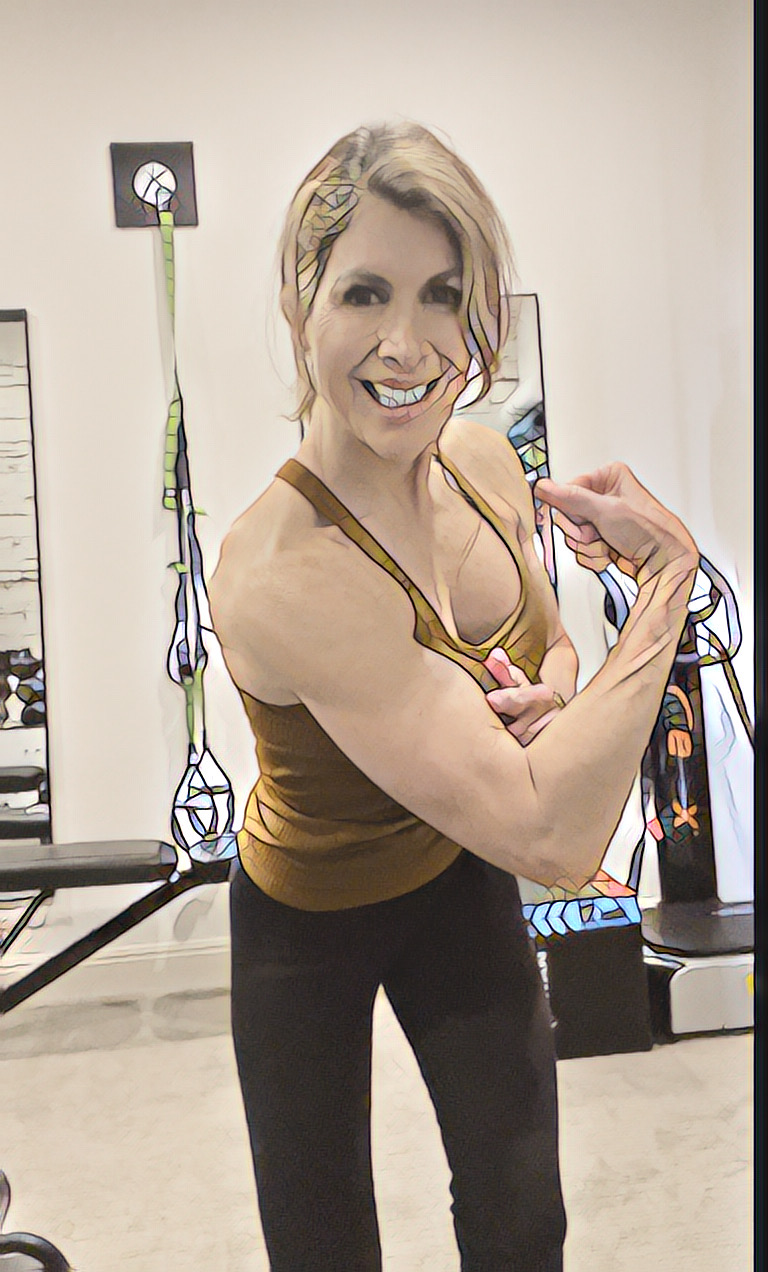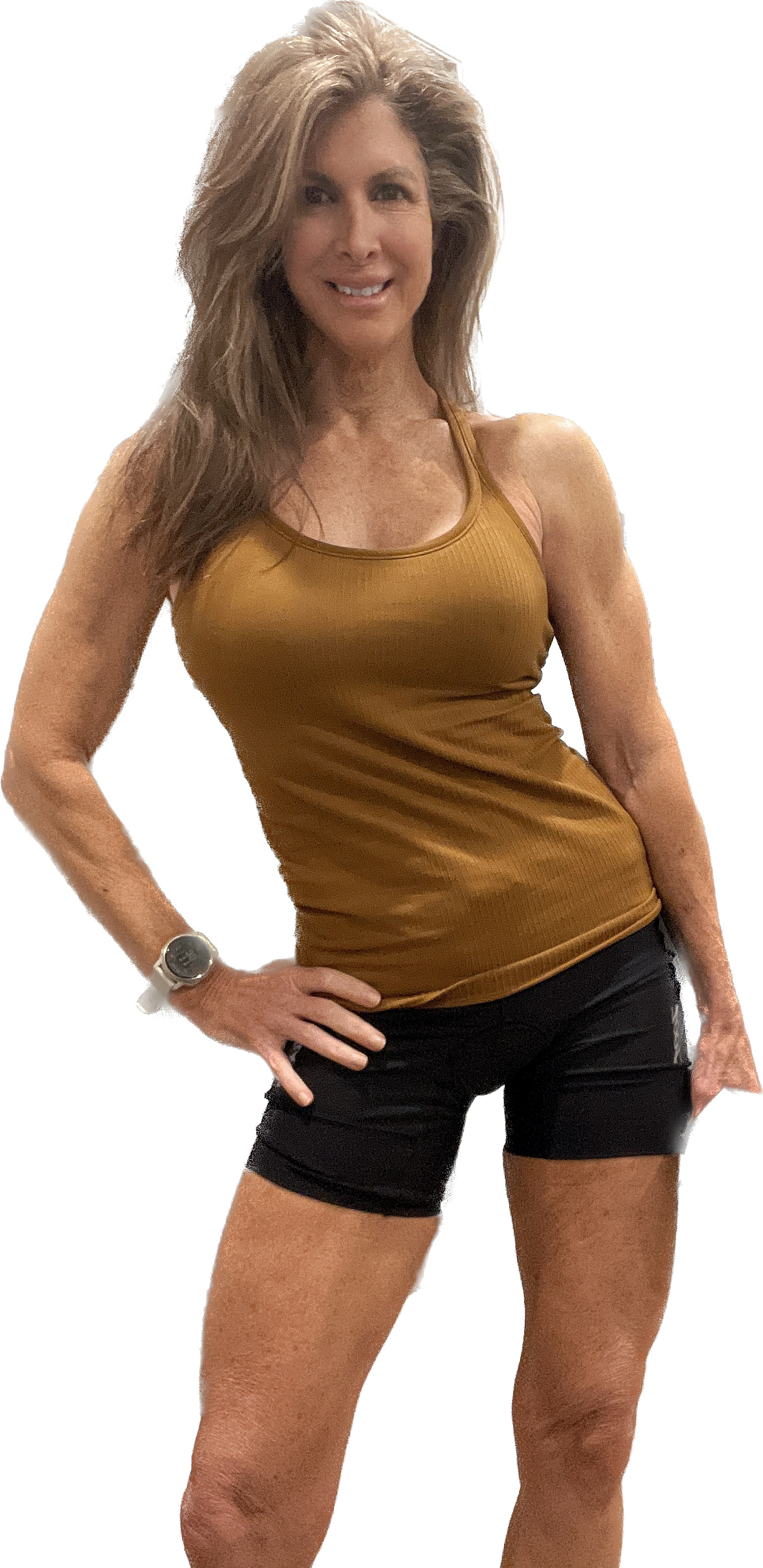
Hey…what did you think I was referring to?

Friends, you know I hate to be the bearer of bad news, BUT the natural loss of muscle mass and strength as we age is associated with all-cause mortality and linked to the incidence of many chronic diseases…like cardiovascular disease and stroke, hypertension, insulin resistance, and type 2 diabetes.

According to the National Institute of Health, muscle mass decreases 3-8% per decade after 30 and this rate of muscle decline is higher after 60!  Less muscle generally means a higher body fat percentage and higher body fat slows your metabolism down, NOT age.

Here are 5 ways to combat muscle decline:

  1. Eat protein (Ladies…are you getting enough?)
  2. Resistance train (Do you have a strength training routine that involves building muscle?)
  3. Increase your Omega 3s (Omega 3’sare anti-inflammatory and inflammation causes muscle to break down)
  4. Check your vitamin D levels (vitamin D helps with muscle protein synthesis)
  5. Walk (walking increases mobility and blood flow which helps with insulin and muscle repair)

If you don’t have access to a gym or some weights, resistance bands are an inexpensive option to help maintain or build muscle.  Many exercises can be done with resistance bands to work the upper or lower body. Here are a few upper body examples:

1. Overhead press

  • Stand with your feet shoulder-width apart and hold the band in each hand with an overhand grip.
  • Raise the band up to shoulder height, then press it overhead until it is straight above your head.
  • Slowly lower the band back down to shoulder height, then repeat.

2. Chest press

  • Lie on your back with your knees bent and your feet flat on the ground.
  • Hold the band in each hand with an overhand grip, palms facing each other.
  • Slowly lower the band down to your chest, then press it back up to the starting position.

3. Bicep curl

  • Stand with your feet shoulder-width apart and hold the band in each hand with a supinated grip (palms facing up).
  • Curl the band up to your shoulders, then slowly lower it back down.

4. Tricep extension

  • Stand with your feet shoulder-width apart and hold the band in each hand with an underhand grip (palms facing down).
  • Bend your elbows and extend your arms behind you, keeping your elbows close to your body.
  • Slowly lower your arms back down to the starting position.

These are just a few examples of exercises that can be done with resistance bands to work the upper body. There are many other exercises that can be done, so find some that you enjoy and that challenge you.

Tips for using resistance bands:

  • When choosing a resistance band, start with a light band and gradually increase the resistance as you get stronger.
  • Make sure to warm up before using resistance bands.
  • Focus on proper form and don’t sacrifice form for weight.
  • Listen to your body and don’t push yourself too hard.
  • Vary your workouts to keep your body challenged.

Resistance bands are a great way to add variety to your workouts and challenge your muscles. They are also a portable and affordable option for strength training. I take them with me when I travel!

Prevent sarcopenia (muscle loss) and get strong today.

Your body and your family will thank you.


Lisa


Fitness is a term that is often used interchangeably with health, but the two are not exactly the same. Health is a state of complete physical, mental, and social well-being, while fitness is the ability to perform physical activity without undue fatigue.

The components of “fitness” include strength, cardio, flexibility, and balance. Strength is the ability of your muscles to contract and produce force. Cardio is the ability of your heart and lungs to deliver oxygen to your muscles. Flexibility is the ability of your joints to move through their full range of motion. Balance is the ability of your body to maintain its equilibrium.  All four of these components of fitness are important for overall health and well-being.

There are many different ways to improve your fitness. You can join a gym, take fitness classes, or simply start exercising on your own. There are many different types of exercise, so you can find something that you enjoy and that fits into your lifestyle. There are also a LOT of free videos and inexpensive fitness apps to help guide you along the way. (I post free workouts on Instagram each week @Hlthchic!)

If you are new to exercise, it is important to start slowly and gradually increase the intensity of your workouts over time. It is also important to listen to your body and take breaks when you need them. Remind yourself,  “Every little bit helps. Every step counts”. It really does!

Improving your fitness is a lifelong journey. There will be times when you are motivated and times when you are not. But if you stick with it, you will reap the many benefits of a healthy lifestyle.

Here are some tips for improving your fitness:

  • Set realistic goals. Don’t try to do too much too soon. Start with small goals and gradually increase them over time.
  • Find an activity that you enjoy. Exercise should be something that you look forward to, not something that you dread.
  • Make exercise a part of your daily routine. Schedule time for exercise each day and stick to your schedule as much as possible.
  • Find a workout buddy. Exercising with a friend can help you stay motivated and accountable.
  • Listen to your body. Take breaks when you need them and don’t push yourself too hard.
  • Be patient. It takes time to see results from exercise. Don’t get discouraged if you don’t see results immediately.

Once you find the activities you enjoy most, make appointments with yourself to help stay on track. Improving your fitness is a great way to improve your overall health and well-being. Remember, building and maintaining MUSCLE (lifting weights) is a marker related to overall longevity. Today is some day. Carpe Diem.

Won’t you join me on this journey? It is a journey that is well worth taking.

Lisa

P.S. To understand how lifting weights and muscle impacts your overall health, see these prior blog posts:


What’s that? Healthspan is the period of life during which a person is healthy and free from disease. It is different from lifespan, which is the total number of years a person lives. A person can have a long lifespan but a short healthspan, or vice versa. I want my healthspan to align with my lifespan, don’t you?   To do this, I’ll focus on these 3 things: strength training, eating healthy, and sleeping well.

So, here’s the thing, as we age, our bodies “can” go through a number of changes. My friends, I’m here to tell you that many age-related declines in health are related to lifestyle decisions…not age. And, one of the most significant changes is a decrease in muscle mass. The loss of muscle mass can lead to a number of problems, including decreased strength, balance, and bone density. In fact, muscle is so important, that it is used to determine not just lifespan and healthspan, but as a metric that unlocks our longevity potential!

To combat potential aging changes, it’s very important to strength train. Strength training helps to build muscle mass and improve bone density. It can also help to improve balance and coordination.

If you’re wondering how to get started, there are a number of different ways to strength train. One popular method is to use weights. Weights can be used to target specific muscle groups or to do full-body workouts. While a gym can provide a variety of options, it’s quite easy to get a great workout from home using your body weight, bands, gliders, or a ball.  Resistance bands are a great option for individuals new to strength training or who have joint pain.

No matter which method you choose, it is important to start slowly and gradually increase the weight or resistance as you get stronger.

In addition to strength training, it is also important to eat a healthy diet. A healthy diet includes plenty of protein, fruits, vegetables, and whole grains. Limit ultra-processed foods and try to avoid chemicals, dyes, and preservatives AND be aware that “natural flavors” aren’t healthy. Read your labels!

To help your muscle-building efforts on the diet side, protein is essential for building and maintaining muscle mass. Fruits and vegetables are packed with vitamins and minerals that are essential for overall health. Whole grains provide fiber, which can help to keep you feeling full and satisfied.

It is also important to get enough sleep. Sleep is essential for muscle recovery. When you sleep, your body releases hormones that help to repair and rebuild muscle tissue. Most adults need around 7-8 hours of sleep per night. However, some people may need more or less sleep. (see prior post about sleep!)

Finally, it is important to listen to your body and take breaks when you need them. If you are feeling pain, stop the exercise and rest.

While strength training is a great way to stay healthy and fit as you age, below are some additional tips for anyone looking to improve their health and fitness today:

  • Start slowly. If you are new to exercise, start slowly and gradually increase the intensity of your workouts over time.
  • Find an activity that you enjoy. There are many different types of exercise, so find one that you enjoy and that fits into your lifestyle.
  • Set realistic goals. Don’t expect to see results overnight. It takes time and effort to see changes in your body.
  • Be patient. Don’t get discouraged if you don’t see results immediately. Just keep at it, and you will eventually reach your goals.
  • Listen to your body. If you are feeling pain, stop the exercise and rest. Don’t push yourself too hard.
  • Eat a healthy diet. A healthy diet is essential for overall health and fitness. Make sure to eat plenty of fruits, vegetables, and whole grains.
  • Get enough sleep. Sleep is essential for muscle recovery and overall health. Most adults need around 7-8 hours of sleep per night.
  • Stay hydrated. Drink plenty of water throughout the day, especially when you are exercising.
  • Manage stress. Stress can take a toll on your health and fitness. Find healthy ways to manage stress, such as exercise, yoga, or meditation.

Following these tips can help you stay healthy and fit as you age.

As my friend Sharon likes to ask, “What have you got to GAIN?”

To read more:

The Best Anti-Aging Secrets Aren’t So Secret

Avoid These Seed oils (PUFAs) & Why

The Fountain of Youth (Lifting!)